The parable of the net (Matthew 13:47-50) is an arresting parable whereby Jesus could explain profound truths regarding the Kingdom of Heaven.
Have you ever wondered why Jesus, a carpenter by trade, used fishing imagery in His teachings? Maybe it is because fishing was a familiar concept for them, or maybe there was just something naturally spiritual about casting a net into unknown depths.
The following parable, considered in light of ten life-changing lessons, will no doubt change our thinking about faith, judgment, and the part we play within God’s overall schemata.
From the inclusive nature of God’s love through the reality of divine judgment, we shall unpack the rich symbolism in this short yet powerful story.
We shall also consider the value of community, the urgency of spiritual growth, and hope to sustain us through life’s difficulties.
So, let us get our mental fishing equipment and let the net go deep into the waters of this parable of the net (Matthew 13:47-50).
Who knows what treasures we may haul up from its depth? Whether one is an old believer or just curious about spiritual matters, there is something herein for everyone.
Are you ready to see how a simple fishing story can change your perspective on life, faith, and eternity?
1. The Kingdom Of Heaven Is Inclusive
Is there ever a time when you feel excluded like you don’t quite fit in? I have, and it’s no good feeling at all. But here’s the good news: when it comes to God’s kingdom, there’s always room at the table for one more.
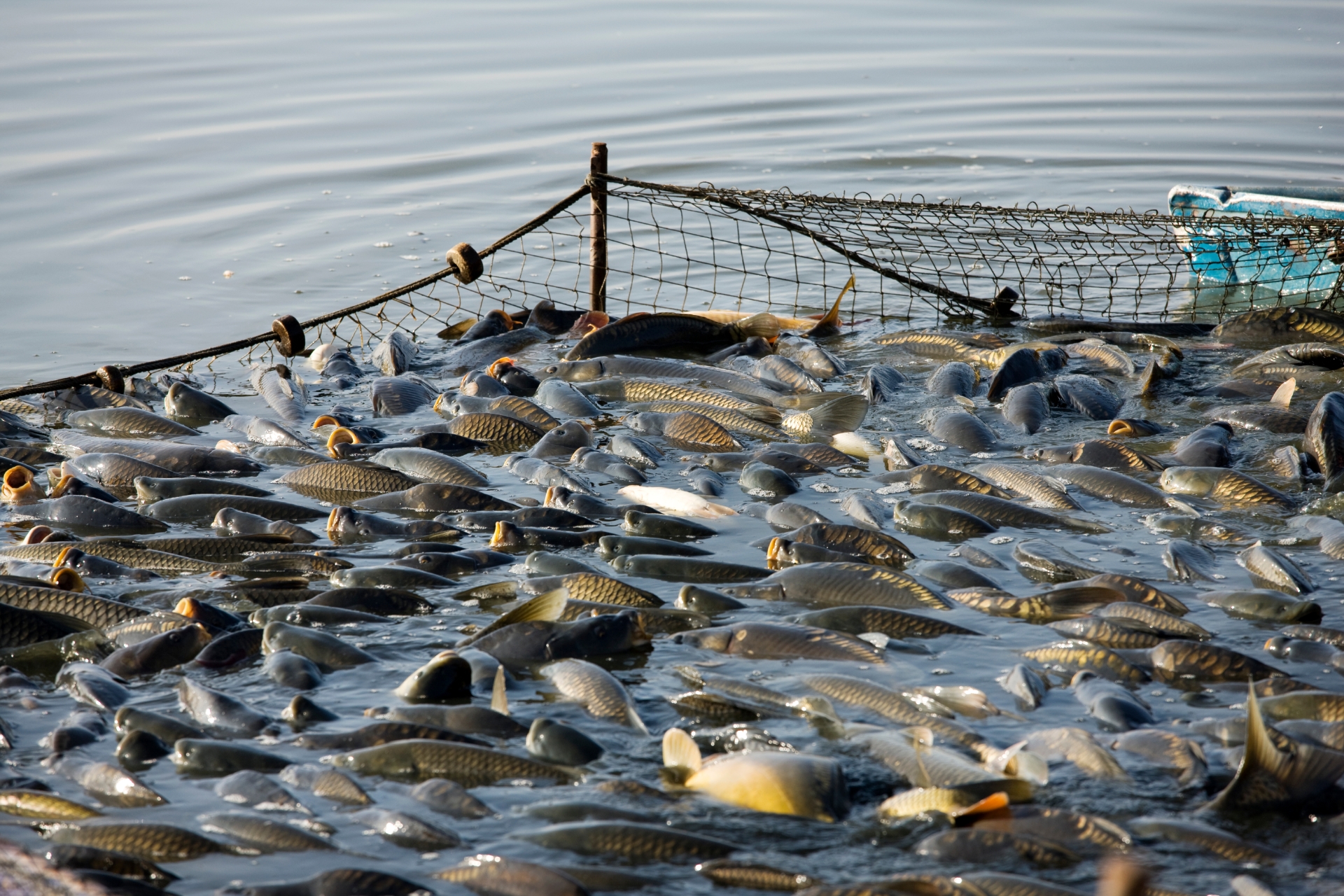
Think about it. In the parable of the net (Matthew 13:47-50), Jesus tells us that the net catches all kinds of fish.
Not just the pretty ones, not only the tasty ones but all sorts. It’s like God’s throwing the biggest, most inclusive party ever, and everyone’s invited!
That reminds me of Peter’s vision in Acts 10:9-16, where God shows him a sheet full of all kinds of animals and says, “Do not call anything impure that God has made clean.”
It is a powerful reminder that God’s love doesn’t discriminate.
But here is the kicker: this inclusion is not about us, not just some fuzzy feelings.
This is a call to action: just as a net does not discriminate in what fish it catches, we are called to service in manifesting God’s love among all kinds of people.
As Paul says in Galatians 3:28, “There is neither Jew nor Gentile, neither slave nor free, nor is there male and female, for you are all one in Christ Jesus.”
So the next time you want to weigh in on who is and who isn’t worthy, just remember the net. God’s kingdom is large enough for all of us. And isn’t that a lovely thing?
2. Judgment Is Coming
I know exactly what you’re thinking right now. We just established that God’s kingdom is super inclusive, and now we jump into judgment? Talk about whiplash! But bear with me, because here’s where things take a fascinating turn.
In the parable of the net (Matthew 13:47-50), after the net was full, the fishermen sat down and sorted the catch.
Good fish in the basket, and bad fish tossed out. It’s a sobering reminder that as much as God’s invitation is open to all, there will finally be a sorting process.
This may sound tough in the first instance, but let us look at it from a different perspective. Suppose there were no judgments whatsoever.
Does that not become unfair then? Would you want to live in a world where good and evil were treated precisely the same?
The reality is, that judgment isn’t about God being mean or picky; it’s about justice and righteousness. As it says in Psalm 9:8, “He rules the world in righteousness and judges the peoples with equity.”
But here is the thing: this judgment isn’t to scare us. It motivates us. Our actions should be driven by consequences, knowing that living ought to honour God and love others.
Remember, it is the same Jesus who told this parable of the net (Matthew 13:47-50) that said, “For God did not send his Son into the world to condemn the world, but to save the world through him” (John 3:17).
The judgment is real, but so is God’s grace. And in that lies our hope.
3. Not Everything That Glitters Is Gold

Let’s face it: we have all at one time or another been fooled by appearances. Perhaps it was that “great deal” online that turned into a scam, or it was that charismatic friend who turned out not to be all that trustworthy.
Life has a way of teaching us that things are not always as they appear.
That is what Jesus was aiming at within the parable of the net (Matthew 13:47-50).
The fishers go through their catch, separating the catch into what’s good, not just keeping the biggest or the shiniest, but rather what’s truly good and worthy.
It is equally important in the spiritual life. In 2 Corinthians 11:14, Paul warned us that “Satan himself masquerades as an angel of light.”
Just because something seems good on the surface does not mean it may be good for our souls.
So how do we develop this discernment? It starts with knowing God’s Word. Psalm 119:105 says, “Your word is a lamp for my feet, a light on my path.”
The more we are acquainted with God’s truth, the easier it will be to identify counterfeits.
But this is not only about knowing; it’s also about developing a close relationship with God. The more time we spend with Him, the more we will start seeing things from His perspective.
Just as with any close friend, the time you spend with them will slowly make you think like them, too.
Remember, in this parable, the sorting comes at the end. We have time to grow, to learn, to become the type of ‘fish’ that is worth keeping.
So let’s not be dazzled by surface-level shine. Let’s focus on cultivating genuine God-honoring character. After all, that is what really glitters in God’s eyes.
5. Actions Have Consequences
You know that feeling when you’ve made a choice and suddenly it dawns on you, “Oh boy, I’m going to have to deal with this later”?
Yeah, me too. It’s a universal human experience, and it’s also a central theme in many of Jesus’ teachings.
In the parable of the net (Matthew 13:47-50), we see this play out big time. The good fish stay in the net and the bad are thrown out.
It is that stark reminder that our actions and decisions count-they have real, everlasting consequences.
Now, I am not saying God sits up there with a clipboard, taking the score of every action of our lives. Yet the Bible is quite plain that we are accountable for how we live.
Galatians 6:7-8 puts it this way: “Do not be deceived: God cannot be mocked. A man reaps what he sows. Whoever sows to please their flesh, from the flesh will reap destruction; whoever sows to please the Spirit, from the Spirit will reap eternal life.”
It is not to threaten us, to encourage us, to inform us that our behavior will bear fruit.
The knowledge that our actions will bring consequences should inspire us to live purposefully, to make decisions consistent with the will of God, as intended: we have a garden to plant.
We must remember what we plant now will determine what type of crop we will reap later on.
And so, next time that comes in big or small, sometimes it’s going to be a real decision, but you will remember this net.
You’re going to say to yourself, “Is this tugging me toward God, or is this taking me away from God?” Because ultimately, that’s what counts.
6. The Value Of Community

Have you ever tried to untangle a fishing net all by yourself? It’s a nightmare. If you have a group of people, it then becomes manageable as each person works on a section. This is a perfect picture of why community is so vital in our journey of faith.
In the parable of the net (Matthew 13:47-50), we see fish caught together in the net. They are not swimming alone but part of a collective catch. The imagery says much about the place of fellowship in spiritual life.
The early church understood this well. Acts 2:44-47 has to say, “All the believers were together and had everything in common.
They sold property and possessions to give to anyone who needed them. Every day they continued to meet together in the temple courts.
They broke bread in their homes and ate together with glad and sincere hearts, praising God and enjoying the favour of all the people.”
This doesn’t mean just attending a service on a Sunday. Being part of a faith community is doing life together-supporting one another through ups and downs, challenging each other toward growth in whatever God has for them, and celebrating one another’s successes.
I remember the days when life was hard, and it seemed as if the problems overwhelmed me. It was the church family who became my lifeline through prayers and meals, reminding me of God’s promises. They actually became the hands and feet of God’s love.
Don’t solo in the journey of faith, always find your ‘school of fish’ – people with whom you can grow, serve, and be supported. Together is always better after all.
7. God’s Kingdom Requires Active Participation
Let’s be realistic here for one second. How many of us have ever signed up at a gym, so hyped, only to let our membership card just sit in our wallets, collecting dust? Signing up is one thing, but actually to go and put in that work is a different story altogether.
It’s the same concerning our spiritual lives. The parable of the net (Matthew 13:47-50) comes before us with active fishermen casting their nets.
They aren’t sitting on the shore, waiting for the fish to miraculously jump into their boats. They’re out there, doing the work.
Jesus calls us into active participation in building His kingdom just the same. Do you remember how, when He called His disciples
He said, “Follow me, and I will make you fishers of men” (Matthew 4:19)? This was a call not to a spectator sport, but one that entails rolling up one’s sleeves and getting involved.
That does not mean we work our way to salvation-we can’t earn it; it’s a gift of grace. Our faith, though, is to compel us unto action. James 2:17 says it a little more bluntly, “Faith by itself if it is not accompanied by action, is dead.”
Well, what does that look like concretely? That looks like serving in your local church, sharing faith with a friend, or showing God’s love through an act of random kindness.
The key is to just do something. Just don’t be pew-warmers but be kingdom-builders!
8. There’s Room For Everyone, But Not Everything
Suppose you have to pack your luggage for going on a tour. You may have a spacious suitcase, but you cannot just throw into it everything that you own, right? You must be selective: only the things most needed and highly valuable for the tour go into the luggage.
All of this is rather similar to what Jesus is teaching us in the parable of the net (Matthew 13:47-50). The net catches all kinds of fish which depicts God’s inclusive love.
But not everything caught into this net will be part of the final catch. There is a separation.
It is a beautiful paradox-God’s kingdom is wide open, yet it also has standards. As Peter says in Acts 10.34-35, “I now realize how true it is that God does not show favouritism but accepts from every nation the one who fears him and does what is right.”
This is supposed to teach us something profound about God’s nature: whilst He is great in love, He is uncompromisingly holy. His grace extends to every man, but all will not be well.
This calls each of us to take seriously our own lives God’s inclusive love beckoning us to pursue holiness. Not perfection, mind you, but continued right-ordering of heart and action in concert with God’s will.
Therefore, God’s kingdom has room for all, but all are called to leave something behind an attitude, behaviour, or belief incompatible with God’s character. It is a process of change whereby day by day, we are becoming more like Christ.
9. The Urgency Of Spiritual Growth

Have you ever had that panic moment when you suddenly realize a deadline is looming and you are nowhere near ready? Well, the parable of the net (Matthew 13:47-50) provides a somewhat similar wake-up call about our spiritual lives.
In that parable, there comes a specific time when the net is drawn in. The fishermen are not fishing eternally but comes a day of reckoning. That speaks to urgency in spiritual growth: we do not know just when such a time will come, but we surely do know it will.
The apostle Paul got this. To the Philippians, he wrote, “Not that I have already obtained all this, or have already arrived at my goal, but I press on to take hold of that for which Christ Jesus took hold of me. Brothers and sisters, I do not consider myself yet to have taken hold of it.
But one thing I do: Forgetting what is behind and straining toward what is ahead, I press on toward the goal to win the prize for which God has called me heavenward in Christ Jesus.”
It is not about living in fear, it is about a purposeful life. It is about making the most out of the time we have, growing in our faith, serving others, and becoming more like Christ.
I once heard a pastor say, “The problem with tomorrow is that it’s always a day away.” We cannot put off our spiritual growth, thinking we will get to it ‘someday’. The time is now.
Let us, then, in our own faith, live with a sense of urgency. Let us seize every chance we get to grow, to serve, and to love-all the stuff that really matters at the end of the day.
Conclusion
As we draw in our net following this deep dive into the parable of the net (Matthew 13:47-50), what riches do we find therein? We have seen how a simple story of fishing may illustrate deep truths relative to God’s kingdom, our spiritual journey, and the final destiny awaiting all of us.
From the inclusive nature of God’s love to the sobering reality of judgment, we have explored lessons that challenge and inspire us.
But here is the thing: knowledge without action is like a net left hanging on the shore.
How will you translate these lessons into real life? Are you going to spread your net wider and embrace the diversity in God’s family? Will you be more perceptive of the influences that you let into your life? Or will you now have a newfound urgency in spiritual growth?
We’re all in this boat together, my fellow fishers of men. Let’s encourage one another, grow with one another, setting our eyes on the horizon to that reward awaits us eternally.
After all, isn’t that what this grand fishing expedition called life is all about?
Save this for later!